Why You Should Get a Mid-Year Hearing Checkup
If you have spent a June evening at Charles Schwab Field cheering through


By: Britt Thedinger, MD | June 25, 2026
A hearing test provides a snapshot, a controlled measurement taken in a quiet room under ideal conditions. That information matters, but it only tells part of the story.
How you hear in a busy restaurant in Omaha, at a family gathering with six conversations happening at once or on a phone call while driving is a completely different experience. For a long time, understanding those situations depended on memory and self-reporting.
Today’s audiology practices have gotten a lot better at closing that gap. Hearing aids can now provide information about how they’re being used and the situations where hearing is most challenging.
Looking at that information alongside your hearing test results gives your audiologist more context than a single office visit can provide.
Hearing assessments do much more than just check what you can hear in a quiet room. Today’s hearing care relies on real information gathered from your daily life and your evaluation to build a complete understanding of your health.
Your audiologist uses that information to make adjustments based on what’s actually happening in your day, not just what showed up the testing room. That tends to show up in pretty specific ways for most people.
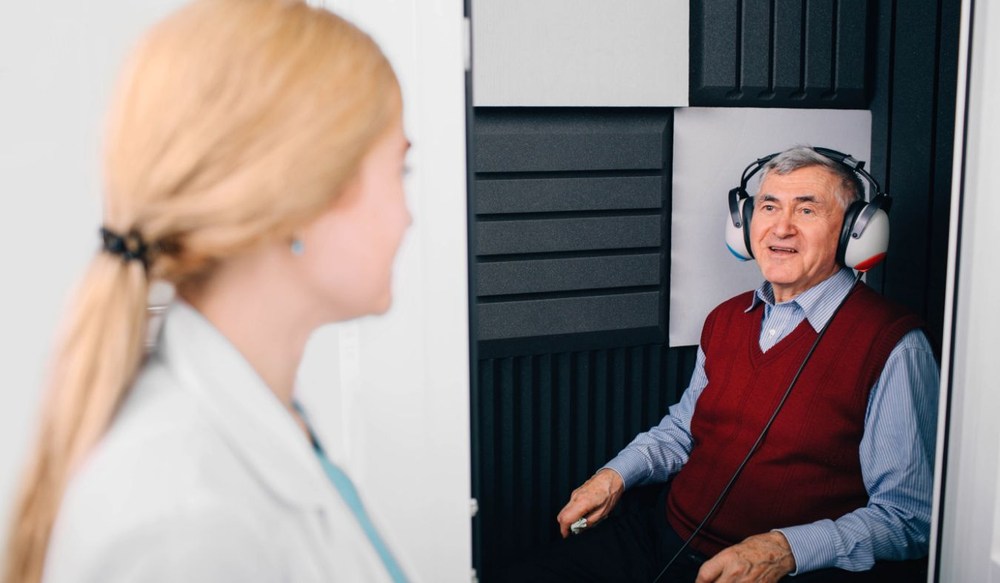
A standard evaluation tracks several important factors to pinpoint exactly where your ears need some support. The process measures the quietest sounds you can notice at different pitches and tracks how well you understand speech when background noise is present.
It also looks at the differences in hearing ability between your left and right ears to find specific problem areas. Your audiologist uses these results to find solutions that fit your lifestyle, keep track of your progress and catch any new changes early.
Sitting down for a hearing assessment involves much more than just putting on headphones and listening for tones. Your specialist wants to understand how you experience the world and where you might be struggling to keep up with conversations.
This conversation helps create a complete map of your ear health so your specialist can offer the right support. During your appointment, they will focus on several specific areas to learn more about your ears:
A hearing test can tell your specialist a lot, but it can’t follow you home. It can’t show what happens when you are trying to hear a grandchild from the backseat. It won’t capture the struggle of following conversations in a crowded restaurant or keeping up at a gathering.
That’s where today’s hearing aids can be helpful. Many models keep track of things like how often they’re worn, when settings are adjusted and the types of listening environments you encounter throughout the day.
When your audiologist reviews that information, they may be able to see why certain situations feel easier than others.
Maybe you’re making frequent volume adjustments in noisy places, or maybe you’re spending more time in challenging listening environments than expected. That information can help the specialist make adjustments based on how you’re hearing between appointments.
The way you experience sound in your daily life provides the best roadmap for setting up your hearing aids. While office tests give an excellent starting point, your real-world feedback tells your audiologist how those settings perform in actual conversations.
Not every hearing challenge shows up during an appointment. You may do well in one-on-one conversations but struggle when several people are talking at once.
Maybe you avoid certain restaurants because it’s hard to keep up with the conversation. Sharing those experiences can help identify where your hearing aids may need some adjustment.
For many people, the biggest challenges happen in busy places. Whether that’s a restaurant in Omaha’s Old Market, a community event or a crowded gathering with friends and family, those details can help your audiologist make adjustments that better fit your everyday life.
They can also program wind-noise suppression features to better manage the brisk, open gusts across the Eastern Nebraska plains. These custom tweaks ensure that your hearing aids perform beautifully when you are out and about.
A hearing test is an important starting point, but it isn’t the only information the specialist uses. They also consider how you’re hearing in everyday situations, along with feedback from appointments and information from your hearing aids.
Together, those details can help explain what’s working well and where you may still be having difficulty.
Your hearing needs can change over time, and your hearing aids may need to change with them. Maybe your routine looks different than it did a year ago, or maybe there are still certain situations that feel challenging.
Bringing those experiences to your appointments gives your specialist more to work with when making adjustments and recommendations.
Managing your hearing health no longer requires a trip to the office every single time you need a minor adjustment. Digital tools allow you to stay in touch with your audiologist right from your favorite armchair.
You can check in when something doesn’t seem right without having to rearrange your entire schedule. Small issues can often be addressed before they become bigger problems.
Patients often have a few practical questions about how these virtual check-ins actually work:
Regular checkups allow your audiologist to look closely at how your ears change over the years. Gradual shifts in your hearing often happen so slowly that you might not notice any difference in your day-to-day life.
Comparing new test results with earlier records helps track changes in your hearing over time. That information can help guide adjustments when they’re needed. Your audiologist looks at both your baseline test results and the actual usage data from your daily life to monitor your progress.
This detailed review reveals exactly how your ears are processing speech and environmental sounds. If a shift is detected, your devices can be adjusted immediately to match your current needs.
Getting the most out of your hearing care is a two-way street. Hearing tests and technology provide valuable information, but what you experience day to day matters just as much. Small details are often more useful than people realize. Something that seems minor to you may explain why a certain setting isn’t working as well as it should.
Sharing those observations during appointments can help make sure your hearing aids are keeping up with the situations you encounter most often. Here are a few simple ways to make those conversations more productive:
When you visit an audiologist, you’re sharing more than just information about your hearing. Medical history, test results and personal details all become part of your record, which is why privacy remains an important part of hearing care.
Hearing clinics follow strict privacy standards when collecting, storing and sharing patient information. Whether your records are kept electronically or in paper form, access is limited to staff members who need that information to provide your care.
While most people spend more time thinking about their hearing test or hearing aids than their medical records, it’s important to know that your information is handled with the same level of care.
If you ever have questions about how your records are stored, your audiologist can help. They can easily explain the clinic’s privacy policies and your rights as a patient.
A hearing aid that performs well in a clinic but struggles at a loud family dinner or a busy work meeting isn’t doing its full job. A few years ago, most of that information simply wasn’t available between appointments.
The more our team knows about how you’re actually hearing day to day, the more precisely your care can be adjusted to match it.
If you want to talk through what data-driven hearing care looks like in practice, Ear Specialists serves the greater Omaha and Bellevue, NE area and is easy to reach at (402) 206-2198.

If you have spent a June evening at Charles Schwab Field cheering through
By: Britt Thedinger, MD | July 26, 2026
A hearing test provides a snapshot, a controlled measurement taken in a
By: Britt Thedinger, MD | June 25, 2026
After 40, most of us get more intentional about health maintenance. You
By: Britt Thedinger, MD | January 19, 2026